™
Lawn care job costing. Know your profit per property.
Connect the work you complete with the costs behind it. See which jobs are earning their place on your route.
Real cost on every job
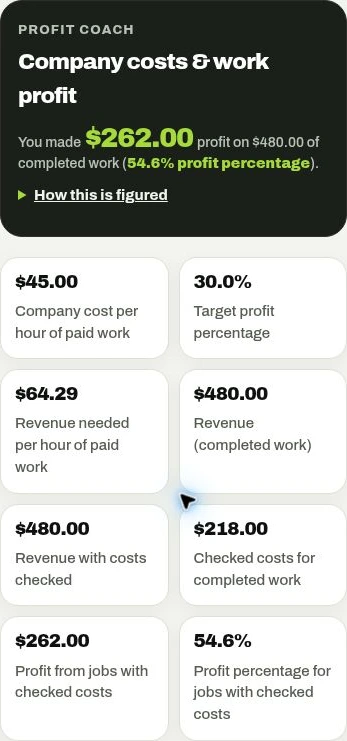
Review labor, equipment, vehicle, fuel, overhead, and direct costs against completed work. Profit uses your saved costs and reviewed job details; missing costs are flagged.
Based on who actually worked
A solo day costs less than a three-person crew day. TurfStack prices labor from the crew that was on the job, not a flat average.
Profit by property
Compare properties by profit and margin over a selected period. Use checked visit history and your target margin to review yards that may need repricing.
Monthly trends
See revenue and profit side by side across the season.
How lawn care job costing works
Start with the revenue for completed work. Review the crew, service time, travel time and applicable company costs. Profit is revenue minus those costs; profit percentage is profit divided by revenue.
Fictional example: a $65 mowing visit with $42 in reviewed costs leaves $23 in estimated profit, a 35.4% margin. That is a worked example, not a promised result.
A property can bring in more revenue while leaving less profit if it takes longer to service or carries higher costs. Comparing both profit dollars and margin helps you decide which yards deserve a pricing review.
Questions about lawn care job profitability
Does job costing include overhead?
Yes. TurfStack uses saved company costs, including overhead, alongside the reviewed job details. Keep those inputs current and review any missing-cost flags before relying on a margin.
Can I see which mowing customers are most profitable?
Profit by property compares completed work over a selected period. Review both dollar profit and profit percentage, and use your target margin to identify yards that may need repricing.
Are invoice payments the same as job profit?
No. Revenue, costs, profit and payments describe different parts of the business. An invoice payment records money received; job profit compares work revenue with its costs.
Built by an experienced lawn care owner whose existing tools were missing a clear view of profit per job.
Get early accessSee the numbers together.